
 Japan’s earthquake was devastating to many companies, particularly electronics manufacturers. But the losses weren’t limited to Asia; many American companies felt the aftershock. The lesson to be learned: disasters can strike unexpectedly, and can have far-reaching impact.
What Japan Can Teach Us about Business Continuity
When a powerful earthquake rocked northeast Japan in March 2011, the impact was felt across the globe—a powerful reminder of how important disaster recovery plans are to all businesses.
You may think of disasters as being relatively rare events, like earthquakes—but however rare in any one location, events such as these can have an effect on many other locations.
Case in point: According to Bloomberg, at least 35 companies derive 15 percent or more of their sales from Japan. Among them are Aflac (an insurance company), Rambus (a memory-chip interface manufacturer), and Coach (a retailer). For example, Japan generated about 75 percent of Aflac’s 2010 sales. American ports and shippers were also affected: the Port of Los Angeles temporarily suspended the transfer of hazardous materials and bunkering fuel operations.
The point is that disasters, whether acts of nature or man-made mishaps, can strike unexpectedly at any organization. Recovering from a catastrophe can be very demanding, expensive, and time consuming—especially for those who haven’t taken preventative measures and preparations.
What can you do to prepare? Develop a Business Continuity Plan (BCP), which will enable your business to resume normal operations after a significant data loss or network downtime due to natural disasters, sabotage, theft, or equipment failure.
Even if you already have a BCP, it’s important to make sure that your plan is flexible and scalable, and can adapt to the natural changes that your business undergoes.
For example, software and hardware installations, updates, and modifications are an important part of business continuity planning. Your data should be properly and regularly backed up, and you need storage and recovery systems and procedures that are continually updated with changes that constantly occur in your IT.
In addition to having a flexible and scalable BCP, you also need a highly skilled IT staff that is up to speed on the importance of backup and recovery of data. It’s important that this staff is properly trained to implement your BCP in the event that your business experiences a major data loss.
Unfortunately, companies routinely suffer significant data loss because they discover the errors in their systems too late—usually while trying to recover the data.
Your business is important to you—and to us, too. We’re here to help you create or fine-tune a BCP that is best suited to your unique business needs, as well as prepare and assist your staff in implementing the plan should it become necessary. Contact us for more details.
 Users of the old Windows Small Business Server 2008 will be glad to know that Microsoft has finally released a new SBS – Windows Small Business Server 2011 – which has improved features designed to make businesses function better.
 Many businesses are now beginning to adapt a paperless policy, as doing so can go a long way in enhancing productivity and making operations much more efficient, while being much more cost-effective at the same time.
 Five years is a relatively short time to grow from a virtually unknown website to what is now one of the most effective social networking platforms on the web today. And businesses will be better off taking advantage of all that Twitter can offer internet marketing campaigns.
 Studies have shown that companies can lose millions of dollars in productivity and bandwidth wasted on video streaming and online gambling during major sporting events. It’s best that you have the right systems in place to ensure that office hours and resources are spent on their intended purposes.
 With the growing need to provide free Wi-Fi for clients and customers, small businesses are faced with the problem of whether to set up the connection themselves, or hire an outsourced company to do the job.
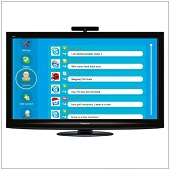 The Skype-enabled TV was developed by David Dinka and his team as a result of a series of worldwide interviews asking respondents about their communication needs. Common desires was discovered: to be able to communicate with colleagues, family, and friends from somewhere comfortable, and to make video calls on a big screen.
 Softphones – software programs that allow you to make calls through the internet – can be a convenient way to communicate, but they can also pose security risks to businesses. Fortunately, softphones for PABX networks provide all the same conveniences but with more exclusivity and security.
 Professional service providers such as attorneys, accountants, and doctors no longer fall within the definition of a creditor under the Red Flag Rule.
 Learn how setting up your own private network can radically improve, if not transform, the way you do business.

